

A pressure washer can quickly remove dust, road grime and old soap from a vehicle. However, using the wrong nozzle, excessive pressure or spraying too close can damage the paint, trim and seals.
Follow these steps to pressure wash your car safely.
Is It Safe to Pressure Wash a Car?
Yes—when the correct equipment and technique are used.
Most damage occurs when users:
-
Use a 0° or turbo nozzle
-
Hold the nozzle too close to the paint
-
Spray directly at damaged paint or loose trim
-
Keep the water concentrated on one area
-
Use more pressure than necessary
Inspect the vehicle before washing. Avoid spraying directly at chipped, cracked or peeling paint.
Choose the Right Nozzle
For most vehicle surfaces, use a 40° white nozzle. Its wide fan spray distributes pressure across a larger area, making it safer for paint, windows and exterior trim.
A 25° green nozzle may be used carefully on tires and wheel wells.
Avoid using these nozzles on car paint:
-
0° red nozzle
-
15° yellow nozzle at close range
-
Damaged nozzles with an irregular spray pattern
Turbo nozzles are designed for durable surfaces such as concrete—not automotive paint.
For a more detailed comparison of turbo and standard spray patterns, read our [Turbo Nozzle vs. Regular Nozzle guide].
Maintain a Safe Distance
Begin approximately 2 feet away from the vehicle and move closer only if necessary.
Keep the spray gun moving in smooth, overlapping passes. Never hold the water stream on one area for an extended period.
Use extra care around:
-
Paint chips and scratches
-
Door and window seals
-
Decals and emblems
-
Cameras and parking sensors
-
Repaired body panels
A hose or spray gun rated for high pressure does not mean the vehicle should be washed at maximum pressure. Always use the lowest effective setting.

What You Need
Prepare the following equipment:
-
40° white nozzle
-
Automotive shampoo
-
Microfiber wash mitt
-
Wheel brush
-
Microfiber drying towels
Use only detergent designed for automotive finishes. Household cleaners may remove wax or damage protective coatings.
Step 1: Inspect and Pre-Rinse
Park the vehicle in the shade and allow the paint to cool.
Check the hose, nozzle, O-rings and fittings for damage or leaks. Make sure every quick-connect fitting is fully locked.
Before connecting accessories, make sure the fitting type and size match your equipment. Our [Pressure Washer Quick Connect Size Guide] explains the most common 1/4-inch, 3/8-inch and M22 connections.
Rinse the vehicle from top to bottom with the 40° nozzle. This removes loose dirt and sand before contact washing.
Step 2: Apply Foam
Fill the foam cannon according to the detergent manufacturer’s dilution instructions.
Apply an even layer of foam across the vehicle. Allow it to loosen the dirt, but do not let it dry on the surface.
Foam helps reduce the amount of dirt that must be removed with a wash mitt, lowering the risk of scratches.
Step 3: Rinse the Vehicle
Remove the foam cannon, release trapped pressure and reconnect the 40° nozzle.
Rinse from top to bottom using smooth passes. Avoid directing concentrated water into:
-
Door and window seals
-
Electrical components
-
Cameras and sensors
-
Exhaust openings
-
Damaged paint
If dirt remains, apply more foam or use a microfiber wash mitt. Do not switch to a narrow, aggressive nozzle.
Step 4: Hand Wash if Necessary
Some road film may remain after pressure rinsing.
Use automotive shampoo and a clean microfiber wash mitt. Wash one section at a time with light pressure, then rinse the mitt frequently.
Use separate brushes and towels for the wheels and painted bodywork. Brake dust trapped in a wheel brush may scratch the paint.
Step 5: Final Rinse and Dry
Rinse away all remaining soap, paying attention to mirrors, badges, door handles and panel gaps.
Dry the vehicle with a clean microfiber towel. Do not allow the car to air-dry in direct sunlight, as minerals in the water may leave spots.

Quick Safety Guide
| Vehicle Area | Recommended Method |
|---|---|
| Painted body panels | 40° white nozzle |
| Windows and trim | Wide spray with controlled pressure |
| Tires and wheel wells | 25° or 40° nozzle used carefully |
| Decals and wraps | Low pressure and extra distance |
| Chipped paint | Avoid direct spraying |
| Cameras and sensors | Do not spray directly |
Common Mistakes to Avoid
-
Using a turbo or 0° nozzle
-
Starting too close to the vehicle
-
Holding the spray in one place
-
Washing hot paint in direct sunlight
-
Allowing foam to dry
-
Using household detergent
-
Ignoring leaking hoses or fittings

Make Car Washing Easier with DECA
DECA pressure washer accessories help make vehicle cleaning more convenient and controlled.
The DECA foam cannon applies an even layer of detergent to loosen dirt before rinsing. DECA five-color nozzle sets include a 40° white nozzle for gentle vehicle cleaning.
The DECA 6-in-1 Multi-Function Nozzle allows users to change spray patterns by rotating the selector, reducing the need to exchange individual nozzle tips.
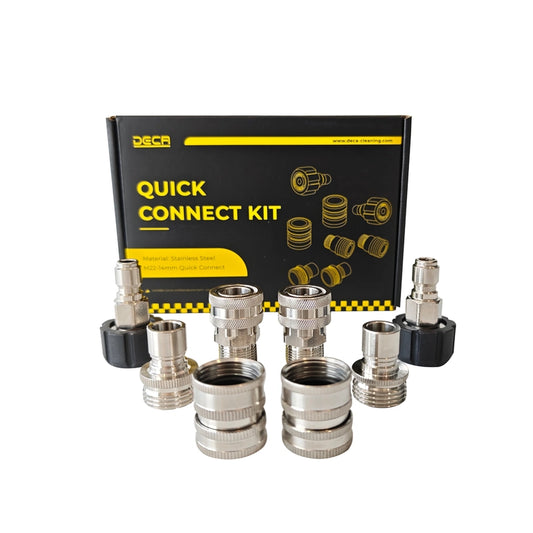
DECA also offers pressure washer hoses, spray guns and quick-connect accessories for different cleaning systems. Always confirm the accessory’s PSI, GPM, connector size and temperature rating before use.
Final Thoughts
To pressure wash a car safely:
-
Use a 40° white nozzle
-
Start from a safe distance
-
Keep the spray moving
-
Avoid turbo and 0° nozzles
-
Use automotive detergent
-
Dry the vehicle after rinsing
The goal is not to use the strongest possible pressure. Controlled water flow, the correct nozzle and proper washing technique will produce a safer result.


