

A pressure washer that suddenly loses pressure can turn a quick cleaning job into a frustrating one. You may notice a weak spray, fluctuating pressure, pulsing water or a machine that performs well for only a few seconds.
The good news is that low pressure does not always mean the pressure washer itself is damaged. In many cases, the problem comes from the water supply, nozzle, hose or fittings.
Here are eight common causes of pressure loss and how to fix them.

1. Insufficient Water Supply
A pressure washer requires a steady supply of water. If the incoming flow is too low, the pump cannot maintain consistent pressure.
Common causes include:
A partially opened faucet
Low household water pressure
A supply hose that is too long or narrow
A kinked garden hose
Multiple appliances using water at the same time
Solution
Open the faucet completely and straighten the supply hose. Disconnect the hose from the pressure washer and run water into a bucket to confirm that the flow is strong and consistent.
The water supply should meet or exceed the pressure washer manufacturer’s required GPM rating.
Never operate a pressure washer without an adequate water supply, as this may damage the pump.
2. A Clogged Water Inlet Filter
Most pressure washers have a small filter where the garden hose connects to the machine. Sand, rust, minerals and other debris can collect in this screen and restrict water flow.
A partially blocked filter may cause:
Weak pressure
Pressure surging
Intermittent water flow
Unusual pump noise
Solution
Turn off the machine and disconnect the water supply. Carefully remove the inlet filter, rinse it with clean water and clear away any visible debris.
Replace the filter if it is torn, heavily corroded or cannot be cleaned properly.
3. The Nozzle Is Clogged
Nozzle openings are small and can easily become blocked by dirt, mineral deposits or dried detergent. Even a partial blockage can create irregular spray patterns and unstable pressure.
Solution
Turn off the pressure washer, shut off the water and squeeze the trigger to release trapped pressure.
Remove the nozzle and clean the opening with a nozzle-cleaning tool or a soft, appropriately sized cleaning needle. Rinse it with clean water before reinstalling it.
Do not enlarge the nozzle opening with a drill bit or oversized metal object.
4. The Nozzle Is Worn or the Wrong Size
Pressure washer nozzles wear over time. As the opening becomes larger, more water escapes and operating pressure decreases.
Using the wrong nozzle orifice size can create a similar problem:
An orifice that is too large may reduce pressure.
An orifice that is too small may overload the pump.
A soap nozzle intentionally operates at low pressure.
Solution
Inspect the nozzle for visible wear or an uneven spray pattern. Replace damaged or worn nozzle tips and select an orifice size that matches the pressure washer’s PSI and GPM specifications.
If the machine has good pressure with one nozzle but not another, the nozzle is likely the cause.

5. Air Is Trapped in the System
Air can enter the system after connecting hoses, changing accessories or running the water supply too low.
Trapped air often causes:
Pulsing pressure
Sputtering water
Delayed pressure buildup
An inconsistent spray pattern
Solution
Turn off the pressure washer but leave the water supply running. Remove the nozzle, hold the spray gun trigger open and allow water to flow until the stream becomes smooth and free of air bubbles.
Reconnect the nozzle and restart the machine.
This simple process helps purge air from the hose, gun and pump.
6. The High-Pressure Hose Is Kinked, Damaged or Restricted
A kinked or internally damaged high-pressure hose can restrict water flow. Cracks, worn sections and damaged reinforcement may also cause leaks that reduce pressure at the spray gun.
A hose can look normal externally while having internal damage that limits flow.
Solution
Inspect the entire hose for:
Sharp bends or kinks
Cuts and abrasions
Bulges or exposed reinforcement
Crushed sections
Water leaking near the fittings
Loose or corroded connectors
Straighten minor bends before use. Replace the hose if it is leaking, bulging, deeply worn or internally restricted.
Never repair a damaged high-pressure hose with ordinary tape or clamps. The replacement hose must be rated for at least the pressure washer’s maximum PSI and suitable for its water flow.
7. A Fitting, O-Ring or Connection Is Leaking
Water escaping from a connection reduces the pressure delivered to the nozzle. Common leak points include:
M22 connections
Quick-connect couplers
Hose ends
Spray gun inlets
Damaged or missing O-rings
M22 fittings are commonly available with 14 mm and 15 mm internal dimensions. Connecting mismatched sizes may create a loose seal and continuous leakage.

Solution
Turn off the system and release all trapped pressure. Inspect each connection and tighten it securely without overtightening.
Check the O-rings for:
Cracks
Flattening
Cuts
Hardening
Missing sections
Replace worn O-rings with the correct size. If a quick-connect fitting remains loose or continues leaking after the seal is replaced, the fitting may need to be replaced.
8. The Unloader Valve, Pump or Engine Needs Attention
If the water supply and accessories are working correctly, the problem may be inside the pressure washer.
A sticking unloader valve can prevent the system from building or maintaining pressure. Worn pump seals, damaged valves or insufficient engine speed can also reduce performance.
Possible warning signs include:
Pressure repeatedly rising and falling
Good pressure for only a few seconds
Water leaking from the pump
Unusual vibration or noise
No improvement after checking hoses and nozzles
Solution
Follow the pressure washer manufacturer’s troubleshooting instructions. Some unloader valves can be cleaned or adjusted, but incorrect adjustment may damage the pump or create unsafe pressure.
If you are unfamiliar with pump repairs, contact a qualified service technician rather than disassembling the unit yourself.
Quick Troubleshooting Guide
| Symptom | Possible Cause | What to Check |
|---|---|---|
| Constantly weak spray | Low water supply or wrong nozzle | Faucet, supply hose and nozzle size |
| Pressure pulses | Trapped air or restricted inlet | Purge the system and clean the filter |
| Pressure drops during use | Kinked hose or insufficient water flow | Inspect both supply and high-pressure hoses |
| Water leaks at a connection | Damaged O-ring or mismatched fitting | Seals, M22 size and quick-connect couplers |
| Uneven spray pattern | Clogged or worn nozzle | Clean or replace the nozzle |
| Pressure remains low with every accessory | Pump or unloader problem | Consult the manufacturer or a technician |
A Safe Order for Diagnosing Low Pressure
Check the simplest causes before assuming the pump is damaged:
1.Confirm that the water faucet is fully open.
2.Straighten the water supply hose.
3.Clean the inlet filter.
4.Purge trapped air from the system.
5.Inspect and clean the nozzle.
6.Check the high-pressure hose for damage.
7.Inspect fittings and O-rings for leaks.
8.Test the machine according to the manufacturer’s instructions.
Changing one item at a time makes it easier to identify the actual cause.
Preventing Pressure Loss
Regular inspection can prevent many pressure problems.
Before each use:
Check both hoses for kinks and damage.
Confirm that every fitting is fully connected.
Inspect O-rings for wear.
Use the correct nozzle for the machine.
Make sure the water supply is adequate.
Flush dirt from hoses before connecting them.
Release pressure before changing accessories.
Store hoses in loose coils away from sharp edges, direct sunlight and freezing temperatures.
Restore Reliable Flow with DECA Accessories
Leaks, worn fittings and restricted hoses are common causes of poor pressure washer performance. Replacing damaged accessories can help restore consistent water flow and create a safer connection.
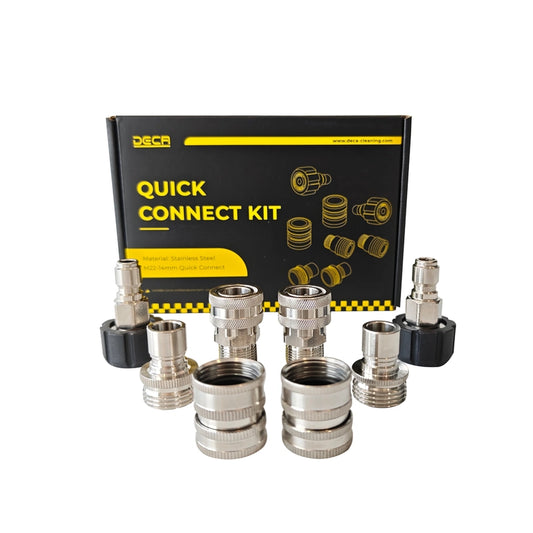
DECA offers pressure washer hoses, spray guns, nozzles and stainless-steel or brass quick-connect fittings for residential and heavy-duty cleaning systems.
The DECA product range includes a 3200 PSI Hose & Gun Kit, a 3/8-inch 50FT 4200 PSI Hose Kit, quick-connect fittings, replacement nozzles and pressure washer upgrade kits. Always choose accessories according to your equipment’s connector size, maximum PSI, GPM and temperature requirements.
Final Thoughts
When a pressure washer loses pressure, start with the water supply, filter and nozzle. These simple issues are responsible for many performance problems and can often be corrected within minutes.
If those components are working properly, inspect the hose, fittings and O-rings before investigating the pump or unloader valve.
Using clean, correctly sized and properly rated accessories helps maintain consistent pressure—and keeps every cleaning job working as efficiently as possible.


