

A foam cannon is one of the most popular pressure washer accessories for car washing and surface cleaning. It mixes water, detergent and air to produce a thick layer of foam that covers the surface before rinsing.
However, a foam cannon does more than make washing look satisfying. When used correctly, it can improve cleaning efficiency and reduce the risk of scratching delicate surfaces.
What Does a Foam Cannon Do?
A foam cannon connects to the front of a pressure washer gun, usually through a 1/4-inch quick-connect fitting.
When pressurized water enters the cannon, it draws detergent from the bottle and mixes it with air. The internal orifice and mesh filter then break the solution into fine bubbles, creating a dense foam spray.
This foam helps:
Loosen dirt, road film and grime
Keep detergent on the surface longer
Reduce direct contact during the initial cleaning stage
Cover large areas more evenly
Make it easier to see which areas have already been treated
Foam cannons are commonly used on cars, trucks, motorcycles, fences, garage doors and other washable outdoor surfaces.
Foam Cannon vs. Soap Dispenser
Although both tools apply detergent, they work differently.
A pressure washer’s built-in soap dispenser normally produces a thin, watery solution. It is useful for general cleaning but may run off the surface quickly.
A foam cannon mixes detergent with water and air at high pressure. This creates thicker foam with better surface coverage and a longer dwell time. For vehicle detailing, this makes the foam cannon the more effective option.
What Affects Foam Thickness?
Thick foam does not depend on the detergent alone. Several parts of the system must work together.
1. Pressure Washer Flow Rate
Water flow is measured in gallons per minute, or GPM. A higher flow rate generally helps the cannon mix more water, detergent and air.
PSI indicates pressure capacity, but high PSI alone does not guarantee thick foam. GPM and the internal orifice often have a greater effect on foam production.
2. Orifice Size
The orifice is a small internal opening that controls water flow through the foam cannon.
Many lower-flow electric pressure washers perform better with a smaller 1.1 mm orifice. More powerful gas or commercial machines may work properly with a larger standard orifice.
The correct size depends on the specifications of the pressure washer.
3. Detergent Concentration
Always follow the dilution instructions provided by the detergent manufacturer. Too little soap creates weak foam, while excessive detergent wastes product and may leave residue.
Warm water can help the detergent mix more evenly, but extremely hot water should only be used if both the cannon and detergent are rated for it.
4. Adjustment Settings
Most foam cannons include two adjustments:
The top control changes the detergent-to-water ratio.
The front nozzle changes the spray from a narrow stream to a wide fan.
A wide fan pattern is ideal for covering vehicle panels, while a narrower pattern can help reach wheels and smaller areas.

How to Use a Foam Cannon
Using a foam cannon correctly only takes a few steps:
- Rinse away loose dirt from the surface.
- Add the recommended amount of detergent to the bottle.
- Add water and mix gently.
- Attach the foam cannon securely to the pressure washer gun.
- Test the spray pattern away from the vehicle.
- Apply foam evenly from the bottom upward.
- Allow it to dwell briefly without letting it dry.
- Rinse thoroughly from top to bottom.
For safer vehicle washing, use a detergent designed specifically for automotive finishes.
Common Foam Cannon Problems
The foam is too watery
Check the detergent ratio, adjustment knob and pressure washer flow rate. A smaller orifice may be required for a low-flow electric pressure washer.
The cannon does not draw detergent
Inspect the pickup tube inside the bottle. Make sure it is connected, submerged and free from blockage.
The spray pattern is uneven
Dried detergent may be blocking the nozzle or internal mesh. Rinse the cannon with clean water after use.
The connection leaks
Confirm that the quick-connect plug is fully seated and inspect the O-ring for wear or damage.
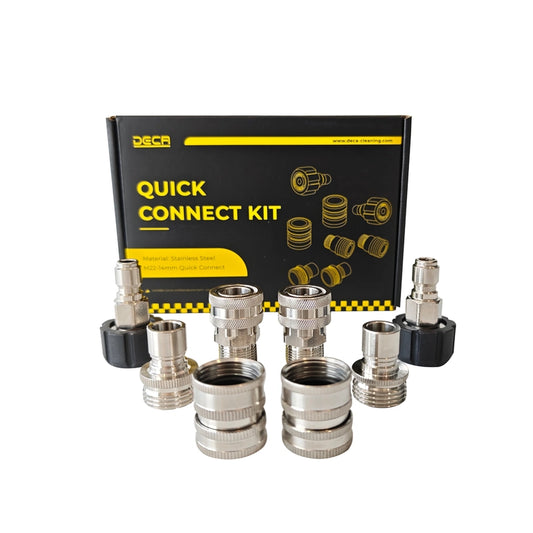
For connector options, see the [DECA 8-Piece Pressure Washer Quick Connect Kit].
How to Choose a Foam Cannon
A reliable foam cannon should offer:
A pressure and flow rating suitable for your machine
A durable metal valve body
A secure quick-connect fitting
Adjustable foam concentration
An adjustable spray pattern
A stable bottle with visible measurement markings
An opening wide enough for easy filling and cleaning
Remember that a high maximum PSI rating represents the cannon’s pressure capacity. Your actual cleaning performance still depends on the pressure washer, water flow, detergent and orifice combination.

Upgrade Your Cleaning Setup with DECA
For users looking for a durable option for both home and professional detailing, the DECA Professional Snow Foam Cannon is built for demanding pressure washer systems.
It is rated for up to 5000 PSI and 5.5 GPM and features a solid brass core, carbon-steel quick connector and 1-liter translucent reservoir. Its adjustable nozzle can switch between concentrated and wide fan spray patterns, while the top regulator makes it easy to control foam concentration. These specifications are listed on the official DECA product page. View the DECA Foam Cannon.
Whether you are washing a vehicle, cleaning wheels or maintaining outdoor surfaces, the right foam cannon can make detergent application faster, more consistent and more effective.


