

A pressure washer nozzle should lock securely into the end of the spray gun or wand. If it feels loose, falls out during setup or shoots off when you pull the trigger, stop using the pressure washer immediately.
This problem is often caused by an incorrectly installed nozzle, dirt inside the quick-connect coupler or worn locking components. In some cases, the nozzle and coupler may simply be incompatible.
Here is how to identify the cause and fix the connection safely.
Check Whether the Nozzle Is Fully Locked
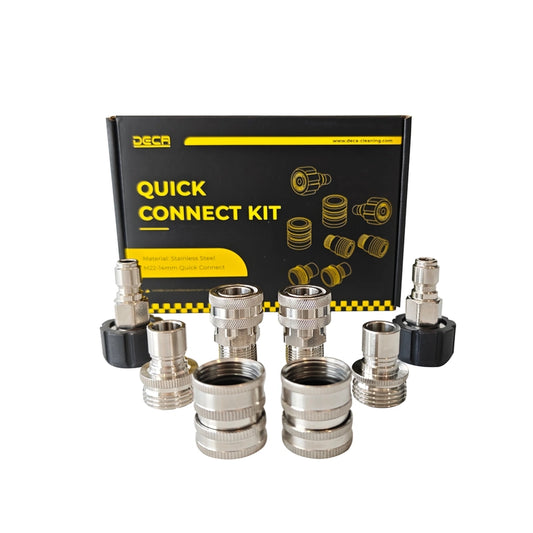
Most pressure washer spray tips use a 1/4-inch quick-connect plug. To install one, pull back the collar on the female coupler, insert the nozzle completely and then release the collar.
The collar should return to its original position and hold the nozzle securely. Before starting the pressure washer, gently pull the nozzle forward. If it comes out without pulling back the collar, it is not properly locked.
Never test a loose nozzle by turning on the pressure washer. High water pressure can eject it from the gun or wand.

Clean the Quick-Connect Coupler
Sand, dried detergent, rust and other debris can collect inside the coupler. Even a small obstruction may prevent the nozzle plug from entering far enough for the locking balls to engage.
Turn off the pressure washer, shut off the water supply and squeeze the trigger until all trapped pressure has been released. Remove the nozzle and inspect both sides of the connection.
Rinse away loose debris with clean water and wipe the nozzle plug with a clean cloth. Avoid inserting screwdrivers, wire or other sharp tools into the coupler because they may damage its internal seal.
After cleaning, reinstall the nozzle and perform another gentle pull test.
Inspect the Nozzle Plug for Damage
The groove around the nozzle plug gives the coupler’s locking balls a place to engage. If this groove is badly worn, corroded or deformed, the quick connect may no longer hold the nozzle securely.
Look for:
- Bending or deformation
- Deep scratches around the locking groove
- Heavy rust or corrosion
- Cracks in the nozzle body
- An unusually loose fit inside the coupler
Replace the nozzle if any of these problems are present. Do not grind, bend or modify the plug to make it fit.
Check the Coupler and Locking Collar
If several different nozzles feel loose in the same spray gun or wand, the coupler is probably the source of the problem.
A working quick-connect collar should move smoothly and return to the locked position after release. The internal locking balls should engage evenly around the nozzle plug.
The coupler may need to be replaced if:
- The collar sticks halfway
- The collar does not return after release
- The nozzle can be removed without pulling the collar
- The coupler is cracked or heavily corroded
- Multiple compatible nozzles fail the pull test
Do not use tape, wire or an improvised clip to hold the nozzle in place. These methods do not repair the locking mechanism.

Inspect the Internal O-Ring
The O-ring inside the female coupler creates a watertight seal around the nozzle plug. It does not normally hold the nozzle in place, but a swollen, twisted or incorrectly sized O-ring can prevent the plug from being inserted completely.
If the connection leaks or the nozzle stops before reaching the locked position, inspect the seal for cuts, flattening or displacement.
Our Pressure Washer O-Ring Guide explains how to identify a damaged seal and install a suitable replacement.
Always use an O-ring designed for the exact fitting. A seal that looks similar may still have the wrong diameter or thickness.
Confirm That the Parts Are Compatible
Pressure washer connections can look similar while using different sizes or locking systems.
Color-coded spray tips and many turbo nozzles commonly use a 1/4-inch accessory plug. High-pressure hoses often use larger 3/8-inch quick connects or M22 threaded fittings. These connection types are not interchangeable.
Before purchasing a replacement, confirm:
- Quick-connect size
- Maximum working pressure
- Water-temperature rating
- Nozzle orifice size
- Compatibility with the gun or wand
The DECA Multi-Angle Wand and Nozzle Kit includes five color-coded spray tips with standard 1/4-inch quick-connect plugs for compatible systems.
For cleaning durable outdoor surfaces, the DECA Rotating Turbo Nozzle also uses a 1/4-inch quick-connect plug and is rated for compatible pressure washers operating up to 3200 PSI.

How to Prevent the Nozzle from Falling Off
A quick connection check before each cleaning job can prevent most nozzle problems.
Make sure the system is depressurized before changing accessories. Keep the nozzle plugs clean and dry, insert each nozzle completely and confirm that the collar has returned to its locked position. Always finish with a gentle pull test.
Replace any nozzle or coupler that is bent, cracked, severely corroded or unable to lock consistently. A loose connection should never be used under pressure.
Final Thoughts
When a pressure washer nozzle keeps falling off, the nozzle itself is not always the problem. The cause may be an incomplete connection, debris inside the socket, a damaged plug, a displaced O-ring or a worn quick-connect coupler.
Start by depressurizing the system and reinstalling the nozzle correctly. If it still fails the pull test, inspect both sides of the connection and replace the damaged or incompatible component before using the pressure washer again.


