

Outdoor furniture collects dust, pollen, mildew and stains throughout the year. A pressure washer can make cleaning faster, but excessive pressure may damage wood, loosen woven materials or remove protective coatings.
Use the following steps to clean outdoor furniture safely.
Check the Furniture Material
Before cleaning, identify the material and inspect it for cracks, loose paint or damaged joints.
| Furniture Material | Recommended Method |
|---|---|
| Plastic | Wide spray and low pressure |
| Metal | Wide spray; avoid chipped paint and rust |
| Wood | Low pressure with extra distance |
| Wicker or rattan | Very low pressure; avoid damaged weaving |
| Fabric cushions | Follow the manufacturer’s care instructions |

Test the spray on a small, hidden area before cleaning the entire piece.
Choose the Right Nozzle
A 40° white nozzle is suitable for most outdoor furniture because it produces a wide, controlled spray.
Avoid using:
-
A 0° red nozzle
-
A turbo nozzle
-
A narrow spray at close range
-
Maximum pressure on delicate materials
Begin several feet away and move closer only when necessary. Always keep the spray moving.

Step 1: Prepare the Area
Move the furniture to an open cleaning area and remove cushions, decorations and loose items.
Brush away leaves and dry debris. Check the hose, spray gun, fittings and nozzle before starting.
Step 2: Apply Detergent
Use a detergent that is safe for the furniture material.
A foam cannon can help distribute the cleaning solution evenly. Allow the detergent to loosen dirt, but do not let it dry on the surface.
Avoid harsh chemicals that may discolor plastic, damage wood finishes or affect nearby plants.
Step 3: Pressure Wash Carefully
Work from top to bottom using smooth, overlapping passes.
Pay extra attention around:
-
Loose paint
-
Wood grain and joints
-
Welded metal areas
-
Wicker edges
-
Screws and fasteners
Do not spray directly into gaps where water could become trapped.
For stubborn stains, apply more detergent and use a soft brush instead of increasing the pressure.
Step 4: Rinse and Dry
Rinse away all remaining detergent with clean water.
Wipe plastic and metal furniture with a microfiber towel. Allow wood and woven furniture to dry completely in a shaded, ventilated area before applying oil, paint or protective coatings.
Do not replace cushions until the furniture is fully dry.

Common Mistakes to Avoid
-
Using a turbo nozzle on furniture
-
Starting too close to the surface
-
Using maximum pressure
-
Spraying loose paint or damaged wood
-
Letting detergent dry
-
Cleaning cushions without checking their care label
-
Storing furniture before it is completely dry
Clean Outdoor Furniture with DECA Accessories
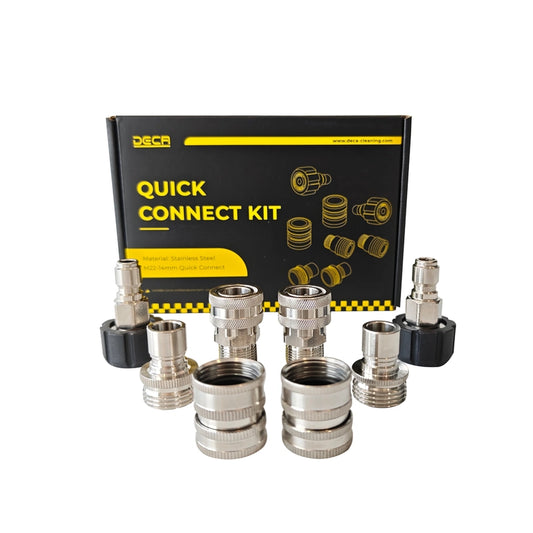
DECA pressure washer accessories help provide greater control when cleaning patios and outdoor furniture.
A DECA spray gun combined with a 40° white nozzle creates a wide spray for controlled rinsing. A DECA foam cannon can apply detergent evenly before washing, while DECA pressure washer hoses provide additional reach around decks and garden areas.
Always confirm the accessory’s PSI rating, connector size, flow capacity and temperature rating before use.
Explore DECA pressure washer accessories at www.deca-cleaning.com.
Final Thoughts
To pressure wash outdoor furniture safely:
-
Identify the furniture material
-
Use a 40° nozzle and low pressure
-
Begin from a safe distance
-
Keep the spray moving
-
Use a soft brush for stubborn stains
-
Allow the furniture to dry completely
Controlled pressure and the correct accessories will clean outdoor furniture more safely than maximum cleaning force.


